

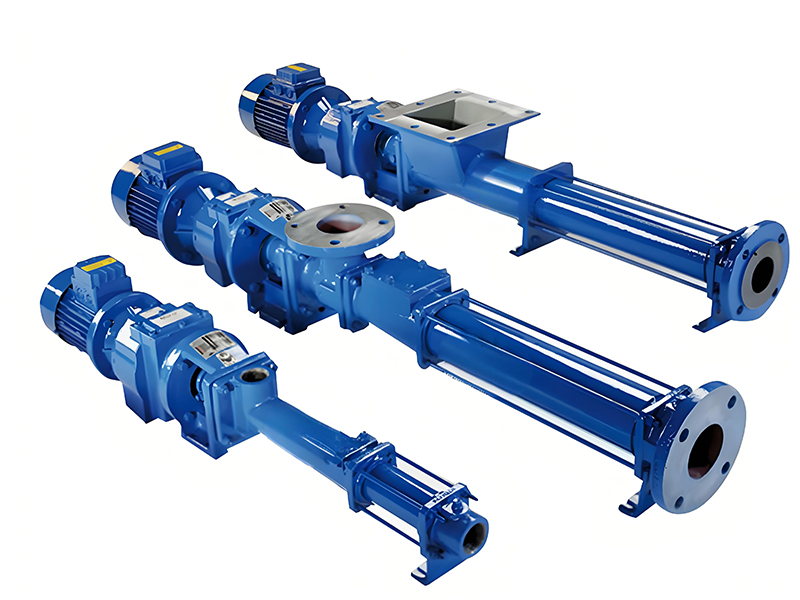
Vertical screw pumps play a critical role in modern power generation facilities.
From large thermal power plants to small renewable energy installations, these
pumps are widely used for reliable, efficient handling of water and process fluids.
This guide explains what vertical screw pumps are, how they work in power plants,
and why they are often selected over other pump technologies.
A vertical screw pump is a positive displacement pump in which the
pumping elements (screws or screw rotor and stator) are arranged vertically.
The pump lifts or transfers liquids along the vertical axis using the screw action
to create sealed cavities that move fluid from the suction side to the discharge side.
In power generation applications, vertical screw pumps are often
installed in sumps, pits, cooling water intakes, condensate wells, and other low-level
locations where fluids must be lifted to higher elevations or transferred to process
equipment. The vertical orientation saves floor space and allows the motor to be
located above the fluid level, reducing the risk of flooding and improving safety.
Although the term “vertical screw pump” can refer to several design concepts, in the
context of power plants it typically covers:
Vertical screw pumps are positive displacement pumps. Unlike
centrifugal pumps, which impart kinetic energy to the fluid, screw pumps move a
fixed volume of fluid with each rotation of the screw. This principle is particularly
valuable in power generation systems that require steady flow at variable pressures.
The basic operating steps are:
Fluid entry: Fluid enters the pump suction at the lower end
of the vertical pump body, often from an underground sump or pit.
Cavity formation: As the screw (or screws) rotate, they create
enclosed cavities between the screw threads and the pump housing or stator.
Axial movement: The cavities move upward along the screw axis,
carrying fluid from the suction side to the discharge side.
Discharge: The fluid is discharged at the upper part of the pump,
typically into a header, pipeline, or process system.
In single-screw vertical pumps, a helical rotor rotates inside an
elastomeric or metallic stator shaped in a matching helical pattern. The eccentric
movement of the rotor within the stator forms continuously moving chambers that
carry the fluid upward.
In multi-screw vertical pumps, usually two or three intermeshing
screws rotate synchronously. One screw is typically driven, while the others are
idler screws. The meshing of the screw threads forms sealed chambers that progress
along the pump axis, moving the fluid smoothly and with low pulsation.
Vertical screw pumps in power generation systems exhibit:
Different power generation processes require different types of vertical screw pumps.
Each design targets specific fluid properties, pressure ranges, and installation
constraints.
Vertical single-screw pumps (often called Progressive cavity pumps) use a single
helical rotor inside a stator. In power plants they are commonly used for:
Their ability to handle viscous or solids-laden fluids with low shear makes them
suitable for auxiliary processes around boilers, flue gas treatment, and wastewater
treatment areas.
Vertical multi-screw pumps are widely used for clean or lightly
contaminated liquids where high efficiency and low noise are important.
Typical roles in power generation plants include:
Multi-screw pumps provide smooth, pulsation-free flow that benefits sensitive
bearings, seals, and control equipment.
In water handling systems associated with power generation, large screw lift
pumps or screw channel pumps may be installed to raise cooling water or
drainage water from low-lying areas. While these are technically closer to
Archimedean screw designs, they are often categorized under vertical screw pumps
in broader power plant pump classifications.
Typical uses include:
Vertical screw pumps are integrated into many subsystems of a power generation plant.
The following are the most common application areas.
Reliable cooling water circulation is fundamental for:
Vertical screw pumps, particularly large vertical screw lift pumps or vertical
multi-screw pumps, are used in:
Condensate is formed when exhaust steam from the turbine is condensed back to water.
Vertical screw pumps can be installed in:
In some designs, vertical screw pumps are favored where condensate contains small
amounts of gas, suspended solids, or where low suction head is available.
Thermal power plants using oil-fired boilers or diesel generators require reliable
fuel oil and lube oil transfer. Vertical multi-screw
pumps are frequently chosen for:
The vertical design allows the motor and drive to remain above any potential oil
leakage area, improving safety and access.
Although high-pressure boiler feed water is more commonly handled by multistage
centrifugal pumps, vertical screw pumps may be used for:
Their ability to maintain constant flow under varying pressure helps in precise
dosing and control tasks around the boiler island.
In coal-fired power plants, fly ash and bottom ash
must be removed from boilers and electrostatic precipitators. Vertical single-screw
pumps are well suited for:
The positive displacement principle allows such pumps to deliver consistent flow
even when the slurry concentration changes.
Many power plants include wastewater treatment or
desalination systems to supply process water. Vertical screw pumps
serve in:
They can be installed in deep pits to minimize the need for priming and allow
gravity collection of wastewater.
Vertical screw pumps offer several advantages that make them particularly attractive
in power generation environments, where uptime, efficiency, and reliability are
critical.
Power plant equipment rooms are often space-constrained. Vertical pumps:
Load-following power plants experience rapid changes in operating conditions.
Vertical screw pumps accommodate:
Sensitive equipment, such as turbine bearings and generator seals, benefit from the
low-pulsation flow produced by screw pumps. This characteristic:
Many vertical screw pumps exhibit favorable suction properties and can operate with
low Net Positive Suction Head (NPSH), which is essential where:
For certain viscosities and operating ranges, vertical screw pumps can be more
efficient than centrifugal pumps. Energy consumption is an important factor in
auxiliary power usage, so efficiency contributes directly to:
Proper design and installation of vertical screw pumps in power generation plants
ensures long-term reliability and optimal performance.
When installing vertical screw pumps in pits or sumps, engineers should consider:
Vertical screw pumps have favorable NPSH requirements but still depend on proper
suction design. Key points include:
In power generation environments, fluids may be hot, corrosive, or contaminated.
Material selection must match:
Common materials for vertical screw pumps in power plants include:
Vertical screw pumps may use:
In power generation applications where leakage of oil or chemicals must be
minimized, mechanical seal systems with appropriate barrier or buffer fluid
arrangements are commonly specified.
Specifications for vertical screw pumps used in power generation vary widely
depending on capacity, pressure, and application. The following tables summarize
typical ranges found in many projects. Values are indicative and must be adjusted
for each design.
| Parameter | Typical Range | Notes (Power Generation Context) |
|---|---|---|
| Flow rate (Q) | 1 – 5,000 m3/h | Small dosing pumps to large cooling water lift pumps |
| Differential pressure (ΔP) | Up to 80 bar (multi-screw) Up to 24 bar (single-screw typical) | High-pressure applications like lube oil and fuel forwarding |
| Head | Up to 800 m (equivalent) | Depends on fluid density and pump type |
| Fluid temperature | -20 °C to +200 °C | Hot condensate, lube oil, thermal oil (with suitable materials) |
| Viscosity | 0.5 – 10,000 cSt | From water-like fluids to heavy fuel oils and slurries |
| Solids content | 0 – 40% (single-screw) 0 – 2% (multi-screw) | Higher solids possible with progressive cavity designs |
| Speed | 300 – 3,600 rpm | Lower speeds for abrasive or viscous duties |
| Component | Common Materials | Usage in Power Generation |
|---|---|---|
| Pump casing | Carbon steel, cast steel, stainless steel | General use with water, condensate, oils |
| Screws / rotors | Alloy steel, stainless steel, surface-hardened steel | Wear resistance and corrosion resistance for extended service |
| Stator (single-screw) | NBR, HNBR, FKM, EPDM elastomers | Adapted to fuels, oils, wastewater, and chemicals |
| Shaft | Stainless steel, duplex stainless steel | Higher strength for deep vertical installations |
| Bearings | Bronze, composite, antifriction bearings | Product-lubricated or grease-lubricated depending on design |
| Seals | Mechanical seals with carbon, SiC, tungsten carbide faces | Low-leakage sealing of oil and process fluids |
| Application | Flow (m3/h) | Pressure (bar) | Fluid | Typical Pump Type |
|---|---|---|---|---|
| Lube oil circulation (turbine) | 50 – 500 | 5 – 20 | Lube oil 32–68 cSt | Vertical multi-screw |
| Fuel oil forwarding (HFO) | 10 – 200 | 10 – 40 | Heavy fuel oil 100–1,000 cSt | Vertical multi-screw |
| Cooling water intake | 500 – 5,000 | 5 – 15 | River / seawater | Vertical screw lift / channel |
| Condensate drainage | 20 – 150 | 5 – 10 | Hot condensate | Vertical single- or multi-screw |
| Fly ash slurry transfer | 10 – 100 | 5 – 16 | Water with solids | Vertical single-screw |
| Wastewater sludge | 5 – 80 | 5 – 10 | Thickened sludge | Vertical single-screw |
Selecting the right vertical screw pump for a power generation project requires
detailed evaluation of process and mechanical requirements.
Key hydraulic selection points include:
Engineers must accurately specify the fluid handled by the vertical screw pump:
Important mechanical considerations are:
In the power generation industry, equipment reliability and availability are
essential. Vertical screw pump selection should reflect:
Proper operation and maintenance of vertical screw pumps significantly extend
service life and reduce unplanned outages in power generation facilities.
For vertical screw pumps, start-up should include:
During shutdown:
Routine tasks for vertical screw pump maintenance in power plants include:
Power plant operators typically:
For multi-unit pump installations, standardization of components across pump sizes
can simplify inventory management.
In power generation, auxiliary power consumption reduces the net output of the
plant. Efficient vertical screw pumps help minimize this internal load.
The overall efficiency of a vertical screw pump is affected by:
Vertical screw pumps are well suited to variable speed drives.
Adjusting speed allows:
Lifecycle cost analysis for vertical screw pumps in power plants should cover:
Selecting a pump with higher initial efficiency and robust construction can be
more economical over the long term than choosing purely on purchase price.
Vertical screw pumps are installed in different ways depending on the type
of power generation technology.
In coal-fired plants, vertical screw pumps support:
Combined cycle plants typically use vertical screw pumps for:
Nuclear power stations require high reliability and stringent safety standards.
Vertical screw pumps are used in:
Material selection and design typically follow nuclear safety class requirements
and relevant codes.
Hydropower plants often use large volumes of water at relatively low heads.
Vertical screw pumps are used for:
Biomass, waste-to-energy, and cogeneration plants frequently require:
Vertical single-screw pumps are particularly useful for high solids content
biomass and sludge streams.
Vertical screw pumps offer constant flow at varying pressures, better handling of
viscous or solids-containing fluids, and low pulsation. In power generation, this
is beneficial for oil systems, slurry handling, and applications where suction
conditions are challenging or where precise flow control is required.
Yes, vertical screw pumps can be used for seawater in cooling water intake or
drainage systems, provided that materials are selected for corrosion resistance,
such as duplex stainless steels or special alloys, and that appropriate coatings
and cathodic protection are considered.
Many vertical screw pump designs can tolerate a moderate amount of entrained gas,
which is common in condensate or hot water systems. However, excessive gas may
reduce capacity and can cause loss of prime, so system design should minimize air
ingress and venting provisions should be included.
Vertical screw pumps are typically designed and supplied according to relevant
international and regional standards. For power generation, the main considerations
are mechanical integrity, pressure containment, testing procedures, and compliance
with plant-specific specifications and safety guidelines. Engineers should check
project documentation for applicable codes and standards.
Service life depends on operating conditions, fluid properties, maintenance
practices, and material selection. In well-designed systems with proper monitoring,
vertical screw pumps can operate reliably for many years, often exceeding a decade
between major overhauls, especially in clean lube oil and cooling water services.
Vertical screw pumps are a key technology in modern power generation. Their ability
to deliver stable, low-pulsation flow in compact vertical configurations makes them
especially valuable in cooling, lubrication, fuel handling, drainage, and wastewater
systems. By understanding the design options, technical specifications, and
application requirements, power plant engineers can select and operate vertical
screw pumps that provide high reliability, energy efficiency, and long service life.
When planning new power generation facilities or upgrading existing ones, careful
evaluation of vertical screw pump technology helps optimize plant performance and
reduce total lifecycle cost.
```

Copyright ? Jiangsu Longjie Pump Manufacturing Co., Ltd.



 Phone
Phone
Comment
(0)