

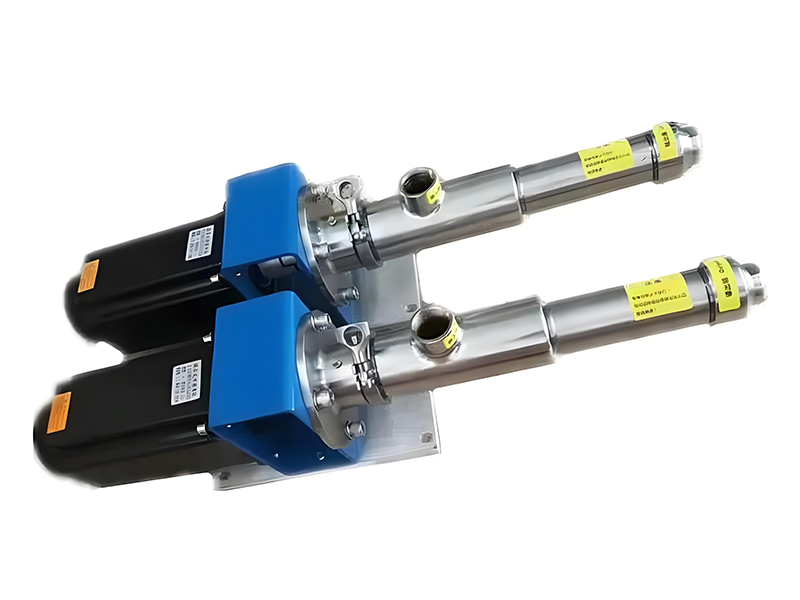
Vertical screw pumps have become a preferred solution in many modern heat transfer systems,
especially where thermal oil, hot water, or specialized heat transfer fluids are circulated
at elevated temperatures and pressures. This comprehensive guide explores the definitions,
working principles, advantages, selection criteria, and technical specifications of vertical
screw pumps for heat transfer applications.
A heat transfer system relies on the continuous circulation of a heat transfer fluid to move
thermal energy from a heat source to a heat consumer. The reliability and efficiency of this
process strongly depend on the pumping technology used. In many industrial heating applications,
vertical screw pumps provide a robust, efficient, and low?noise solution that can handle
demanding operating conditions.
Vertical screw pumps are a variant of screw pumps where the pump shaft is installed vertically.
This configuration offers unique advantages for heat transfer systems, including space?saving
installation, improved safety with hot fluids, and simplified integration into tanks,
reservoirs, and thermal oil systems.
Typical heat transfer system applications for vertical screw pumps include:
A vertical screw pump is a positive displacement pump that uses one or more intermeshing screw
rotors to move fluid along the pump axis. The vertical arrangement means that the pump shaft
and screws are mounted vertically, often with the motor installed above the pump.
In the context of heat transfer systems, a vertical screw pump is usually designed to handle:
Vertical screw pumps belong to the broader family of screw pumps, which also includes horizontal,
twin?screw, and three?screw configurations. The vertical configuration is particularly suitable
for applications where floor space is limited or where submerging the suction side into a tank or
reservoir improves priming and NPSH conditions.
The working principle of a vertical screw pump is based on the controlled movement of cavities
formed between the screw flanks and the pump casing. As the screws rotate, these cavities
transport the heat transfer fluid from the suction side to the discharge side in an almost
pulsation?free manner.
In a typical three?screw vertical pump used in heat transfer systems:
The central power rotor is driven by the motor. As it turns, it meshes with two idler rotors.
Fluid enters the suction port, filling spaces between the screw threads.
The rotation of the screws forms sealed cavities that move axially upward or downward
(depending on the arrangement) from suction to discharge.
The fluid is transported at a nearly constant volume per revolution, producing a steady,
low?pulsation flow ideal for heat transfer circulation.
The design minimizes internal recirculation and provides relatively high efficiency for
viscous heat transfer fluids such as thermal oil.
Vertical screw pumps are well suited for common heat transfer media such as:
Their gentle pumping action, limited shear, and stable flow profile make them ideal for
protecting fluid integrity and maintaining consistent heat transfer performance.
The use of vertical screw pumps in heat transfer applications brings a combination of hydraulic,
mechanical, and operational advantages. These benefits translate into improved energy efficiency,
longer system life, and safer operation when handling hot oil or high?temperature water.
One of the most obvious benefits is the compact footprint. A vertical screw pump requires minimal
floor space compared to many horizontal pumps. This is significant for:
The vertical configuration allows the pump to be installed directly on tanks or reservoirs,
reducing the need for long suction lines and simplifying piping layouts.
Cavitation can severely damage pumps in heat transfer systems, especially when handling high?temperature
fluids that have low vapor margins. Installing a vertical screw pump with the suction submerged in a
tank or sump improves the available Net Positive Suction Head (NPSHa).
Benefits include:
Vertical screw pumps provide smooth, pulsation?free flow, which is advantageous for heat transfer systems
where stable flow improves temperature control and heat exchanger performance. The screw mechanism
inherently dampens pressure pulsations, resulting in:
Many heat transfer fluids, particularly thermal oils and synthetic heat transfer media, have
higher viscosity than water, especially at lower operating temperatures. Screw pumps generally
handle viscous fluids more efficiently than many centrifugal pumps at the same duty point.
In heat transfer systems, this can lead to:
Although heat transfer systems are typically flooded, vertical screw pumps can accommodate
challenging suction conditions. Their positive displacement nature allows reliable operation
under low inlet pressure and supports self?priming behavior when properly designed for
the specific system.
Vertical screw pumps are designed with robust rotors, heavy?duty bearings, and well?engineered
sealing systems suitable for hot fluids. Their gentle hydraulic action limits wear and extends
component life. In heat transfer systems, these pumps are often expected to run continuously for
long periods; their reliability directly supports process availability.
Circulating hot oil or high?temperature water needs careful attention to safety. The vertical design
helps minimize the risk of leakage and direct contact with hot components:
Vertical screw pumps in heat transfer systems are often paired with variable frequency drives (VFDs).
This allows dynamic adjustment of flow rate according to process heat demand, improving:
Screw pumps used in heat transfer systems can be installed either vertically or horizontally.
The choice between vertical and horizontal arrangements depends on space, system design, and
operational requirements. The following table summarizes key differences for heat transfer applications.
| Aspect | Vertical Screw Pump | Horizontal Screw Pump |
|---|---|---|
| Installation Footprint | Small floor area, uses vertical space effectively | Larger floor area, lower overall height |
| Suction Arrangement | Can be tank?mounted or sump?mounted; improved NPSH | Typically side?suction from piping network |
| Accessibility for Maintenance | Motor and upper components easy to access; lower parts may require lifting | Full pump accessible at working height |
| Application in Hot Oil Systems | Very suitable where pump is integrated with thermal oil tanks | Common where pumps are installed on baseplates near heaters |
| Vibration and Noise | Low, with small footprint for rigid mounting | Low, but may require more alignment checks |
| Initial Piping Complexity | Short and direct suction lines, simplified routing | More horizontal runs, possible additional supports |
| Use in Retrofitting | Advantageous where floor space is limited | Preferred if height is restricted |
| Safety for Hot Surfaces | Allows elevated connection points, reduced floor?level exposure | More hot surfaces and piping at operator level |
| Typical Heat Transfer Applications | Tank?mounted thermal oil circulation, sump evacuation, system return lines | Heater feed pumps, main loop circulation pumps |
Vertical screw pumps serve many roles in industrial heat transfer systems, from primary circulation
to auxiliary duties. Understanding these use cases helps clarify the benefits and design requirements.
In closed?loop thermal oil systems, vertical screw pumps can:
In hot water heat transfer systems, especially those at elevated temperatures and pressures, vertical
screw pumps can be implemented:
Many chemical reactors, distillation units, and polymerization processes rely on accurate
temperature control via heat transfer fluids. Vertical screw pumps are used to:
Vertical screw pumps are also deployed in energy recovery circuits that use thermal oil or
pressurized water to capture waste heat from flue gases, compressors, or industrial processes.
Their vertical mounting facilitates integration into modular skid systems.
Process heating with thermal oil or hot water is common in the food, beverage, and pharmaceutical
sectors. Vertical screw pumps support:
Vertical screw pumps incorporate specific design features to ensure safe and reliable operation
with high?temperature heat transfer fluids. These aspects should be evaluated when selecting a pump
for a heat transfer system.
Materials must resist thermal stress, oxidation, and potential chemical interaction with the heat
transfer fluid. Common material choices include:
Bearing design is critical in vertical pumps. For heat transfer applications:
Mechanical seals or packing systems must withstand high temperatures and possible thermal cycling.
Common approaches include:
The geometry of the screws and casing is optimized for:
Vertical alignment must accommodate thermal expansion of the pump casing, shaft, and connected piping.
Design practices include:
Performance ranges for vertical screw pumps used in heat transfer systems vary depending on design
and manufacturer, but many follow similar capacity and pressure envelopes. The following table provides
indicative data for orientation and comparison.
| Parameter | Typical Range | Notes for Heat Transfer Applications |
|---|---|---|
| Flow Rate (Q) | 0.5 – 500 m3/h (2 – 2,200 gpm) | Common sizes used for thermal oil circulation and hot water loops |
| Differential Pressure (ΔP) | Up to 40 bar (580 psi) or more | Higher pressures possible with multiple screw stages and specific designs |
| Operating Temperature | -20 °C to 350 °C (-4 °F to 662 °F) | Exact limit depends on materials, seals, and bearing configuration |
| Viscosity Range | 1 – 2,000 cSt (mm2/s) | Optimized for typical thermal oils and synthetic heat transfer fluids |
| Speed | 500 – 3,600 rpm | Speed selected based on fluid viscosity, noise, and desired life time |
| Power Rating | 0.75 – 500 kW (1 – 670 hp) | Depends on flow, pressure, and efficiency for the selected duty point |
| Maximum Suction Pressure | Up to 25 bar (363 psi) | Important for high?pressure hot water and pressurized systems |
| Mounting Type | Tank?top, sump?mounted, or baseplate vertical | Selection influenced by available space and NPSH requirements |
| Connection Sizes | DN 25 – DN 250 (1" – 10") | Standard or customized flanged nozzles for system integration |
These specification ranges are representative and should be refined according to the target
heat transfer system, the specific fluid, and local standards such as ISO, API, or EN where applicable.
Selecting a vertical screw pump for a heat transfer application requires a systematic evaluation
of both hydraulic and mechanical requirements. The following steps outline a practical selection approach.
Begin by collecting key design data:
Confirm that a vertical screw pump is appropriate compared with other pump types:
For high?temperature, viscous fluids with relatively constant flow requirements,
vertical screw pumps are typically well suited.
For low?viscosity fluids and large flow variations, consider how screw pump efficiency compares
with centrifugal alternatives.
Conduct hydraulic calculations to:
Choose materials compatible with the heat transfer fluid and temperature:
Check physical integration of the vertical screw pump:
Confirm available height for pump, motor, and any necessary dismantling clearance.
Verify that suction and discharge nozzles can be connected with minimal stress.
Consider accessibility for routine inspection and seal replacement.
When comparing vertical screw pumps for heat transfer service:
Proper installation is vital to achieve the full benefits of a vertical screw pump in a heat
transfer system. Attention to structural support, piping, and thermal management is essential.
The pump and motor assembly should be mounted on a sufficiently rigid structure:
Piping connected to the vertical screw pump must accommodate thermal expansion and mechanical
loads. Recommended practices include:
For high?temperature heat transfer systems, both the pump and the connected piping often require
insulation to:
Modern heat transfer systems frequently integrate vertical screw pumps with:
Ensuring proper instrumentation and wiring at the installation stage simplifies commissioning
and long?term operation.
Vertical screw pumps in heat transfer service often operate continuously. Implementing sound
operational and maintenance practices helps ensure reliable performance and long service life.
Proper start?up and shutdown minimize thermal and mechanical stress:
Regular checks should include:
The quality and condition of the heat transfer fluid directly affect pump performance:
Common operational issues and potential causes include:
Early detection and correction prevent more serious failures in the heat transfer system.
Vertical screw pumps operating with hot oil or high?temperature water must meet applicable
safety regulations and industry standards. While specific requirements vary by region and industry,
key considerations include:
Pumps and associated components must be designed and certified for the maximum working pressure
and temperature of the heat transfer system, including:
In systems that handle flammable heat transfer fluids or operate in hazardous areas, pumps may
need to comply with:
Vertical screw pump installations should be evaluated for:
In many heat transfer applications, vertical screw pumps compete with centrifugal pumps, gear pumps,
and other positive displacement technologies. Their advantages often include:
As industrial heat transfer systems become more energy?efficient and digitally connected, vertical
screw pumps continue to evolve. Emerging trends include:
Integration with smart controls – Real?time data from sensors for predictive
maintenance and energy optimization.
Higher temperature capabilities – New materials and seal technologies allowing
operation at even higher heat transfer fluid temperatures.
Improved efficiency – Advanced screw profiles and surface treatments to
reduce slip and internal losses.
Modular system design – Vertical screw pumps integrated into standardized
heat transfer skids and packages.
These developments strengthen the position of vertical screw pumps as a key technology in modern,
energy?conscious heat transfer systems across many industries.
Vertical screw pumps offer a compelling combination of reliability, efficiency, and compact
installation for heat transfer systems using thermal oil, hot water, or synthetic heat transfer
fluids. Their smooth, low?pulsation flow supports precise temperature control and stable
process heating performance.
The vertical configuration optimizes floor space, improves NPSH conditions, and enhances safety
for operators working around high?temperature equipment. When properly selected, installed,
and maintained, vertical screw pumps can provide long?term, energy?efficient service in a wide
range of industrial heat transfer applications.
Engineers and system designers who understand the benefits, design features, and operational
best practices of vertical screw pumps are better equipped to specify robust and efficient
heat transfer systems that meet demanding process requirements and regulatory standards.
```

Copyright ? Jiangsu Longjie Pump Manufacturing Co., Ltd.



 Phone
Phone
Comment
(0)